
November 4, 2026
Porcelain or ceramic: what is the difference in a tea set?
By The Anaiza Nest team · Last updated
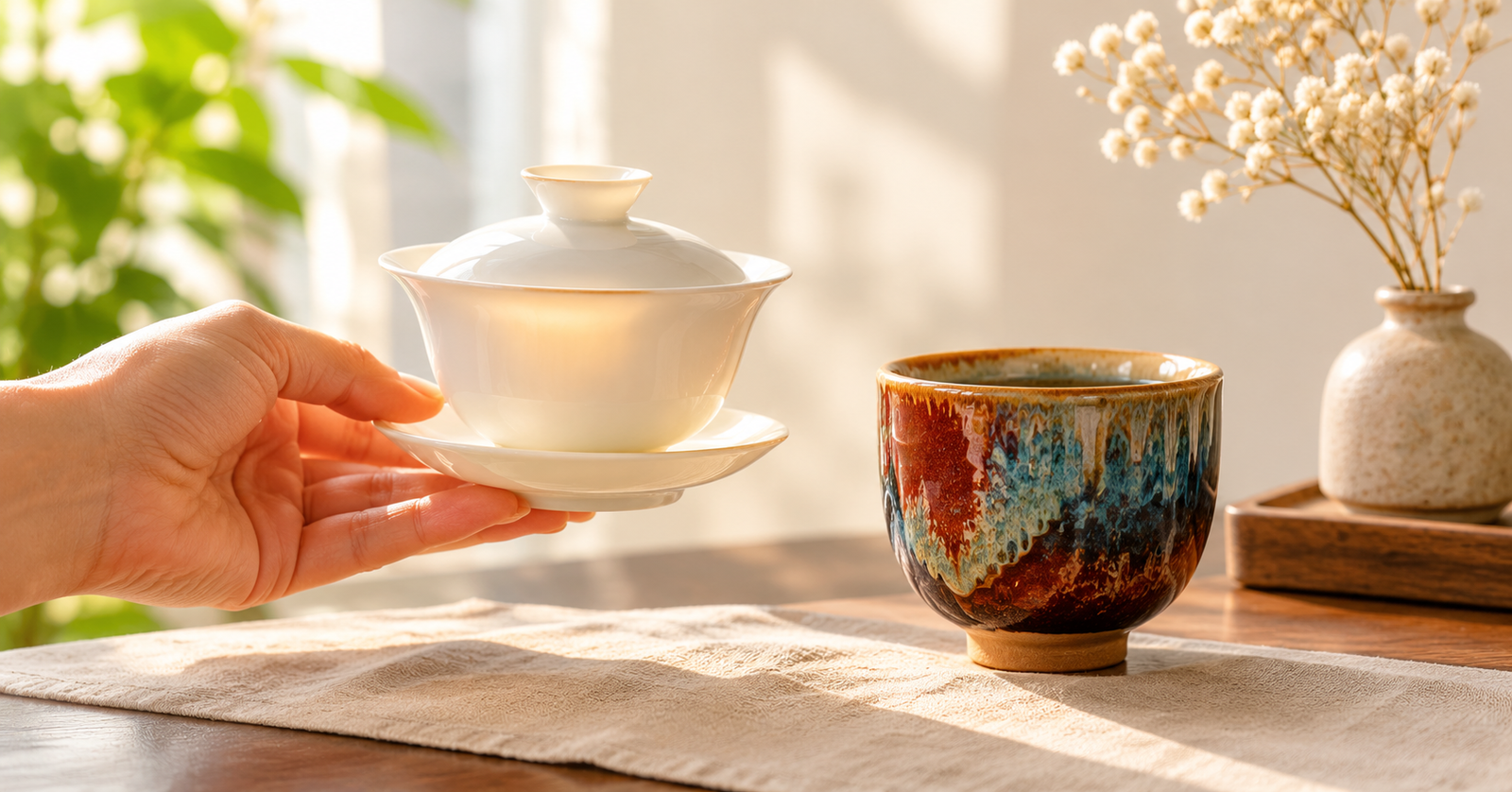
Porcelain and ceramic come from the same family. The difference is in the clay, the fire and the feel in your hand.
Is porcelain a type of ceramic?
Yes. Ceramic is the family name for anything made from clay and hardened by fire. Porcelain is one member of that family, made from a fine white clay called kaolin and fired at a very high heat. So every porcelain cup is ceramic, but not every ceramic cup is porcelain. When a tea set is simply called "ceramic", it usually means a glazed clay body that is thicker and heavier than porcelain, often called stoneware.
What is the difference between porcelain and ceramic?
| Porcelain | Glazed ceramic | |
|---|---|---|
| Clay | Fine white kaolin | Coarser clay, often buff, grey or brown |
| Firing | Very high, around 1,300°C | Lower, so the body stays slightly porous under the glaze |
| Feel | Thin, smooth, light | Thicker, heavier, solid in the hand |
| Light | Thin pieces let light through | Light does not pass through |
| Sound | A clear ring when tapped | A softer, duller note |
| Look | Pure white, or fine celadon and painted glazes | Rich, colourful glazes: crackle, reactive, painted florals |
How can you tell porcelain from ceramic at home?
- Hold it up to the light. Thin porcelain glows when a lamp or the sun is behind it. Our embossed white porcelain dragon tea set shows this clearly: the carved dragon appears inside the cup.
- Look at the foot. Turn the cup over. The unglazed ring at the base shows the clay itself: bright white for porcelain, warmer and darker for most ceramic.
- Tap the rim gently. Porcelain rings like a small bell; ceramic answers with a soft knock.
- Feel the weight. For the same size, porcelain is lighter.
Which keeps tea hot for longer?
Glazed ceramic. Its thicker walls hold heat, so a pot of milk tea stays warm through a long conversation. Porcelain heats up and cools down faster, which suits short, careful brews: green tea, oolong, or gongfu rounds poured a little at a time. If your family makes one large pot and refills cups slowly, ceramic is the easier choice.
Does porcelain change the taste of tea?
No. Porcelain is fired so hot that it becomes glass-like and does not absorb anything, so it shows the true taste and colour of every tea. Glazed ceramic is also neutral where it is glazed. Only unglazed clay, such as a purple sand clay teapot, takes on the flavour of the tea over time, which is why tea lovers keep one pot for one tea.
Which is stronger?
Porcelain is harder and resists scratches and stains well, but a thin rim can chip if knocked. Thick ceramic takes daily knocks more easily but can crack from a sudden change in heat. Both last for years with simple care: warm the pieces before pouring boiling water, and wash by hand. Our guide on how to care for a ceramic tea set covers the details.
Porcelain or ceramic: which makes the better gift?
- Choose porcelain for someone who loves a refined table, or who drinks green tea and oolong. Try the embossed white porcelain dragon tea set for 8 (৳9,870) or the Five Blessings celadon tea and incense set (৳6,200).
- Choose glazed ceramic for a family that drinks milk tea every day and wants colour on the table. Try the floral ceramic tea set for 4 with tray (৳6,700), the Ruyao blue and white lotus tea set (৳5,530) or the crackle glaze ceramic travel tea set (৳3,590).
- Choose reactive glaze cups for someone who likes every piece to be one of a kind: the Japanese-style reactive glaze cups (৳2,660) or the five elements tea cups (৳2,150).
Every Anaiza Nest product page names the material in its specifications, so you always know which one you are choosing.
Browse every set in tea sets, or see cups and mugs.
Gifted, beautifully.